test Design jjj trends come and go, but nature always finds its way back in. From penthouse minimalism to cozy cottage-core, plants are the one design element that transcends style boundaries—fluid, adaptable, and endlessly expressive. But while it’s easy to say, “Just add plants,” the art lies in blending them seamlessly into a space without disrupting the underlying aesthetic.
Why Plants Are Style-Chameleons
Unlike furniture or color schemes, plants aren’t bound by trends. Their organic shapes, shifting textures, and natural variance introduce a dynamic, living element that adapts to almost any interior. For designers, this creates a unique opportunity: use plants not as accessories, but as intentional components of spatial storytelling. And the team at JBD Concepts live this theory, which is why they love working closely with designers every day.
Done well, they can:
Reinforce material palettes (e.g. pairing a silvery eucalyptus with cool-toned Scandi interiors)
Echo architectural lines (think of upright palms in modernist settings)
Soften or contrast harsh angles or hard surfaces
Add a sensory layer—movement, scent, humidity
How to Match Plants with Popular Interior Styles
Below, we break down 10 of the most popular design aesthetics and show which plant types, placement strategies, and container choices work best with each.
1. Scandinavian / Nordic
Style Traits: Clean lines, white/light wood, neutral palettes, natural textures
Plant Picks:
Snake Plant (Sansevieria)
Pilea Peperomioides (Chinese Money Plant)
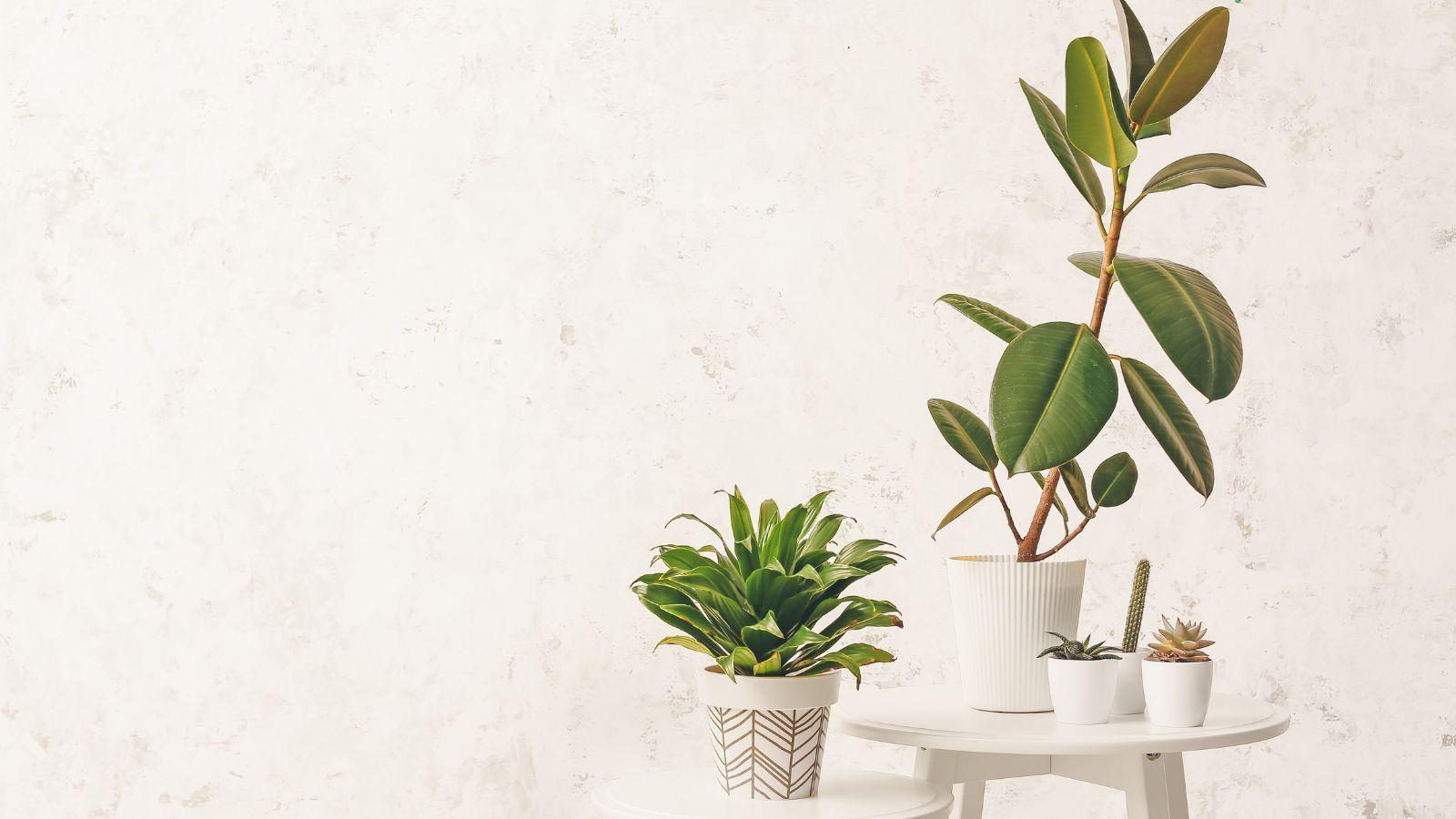
Rubber Plant (Ficus elastica)
Design Tips:
Choose planters in matte ceramic or light-toned wood.
Focus on simplicity and airiness—group 2–3 small plants near windows for balance.
Hang trailing ivy or string-of-pearls to add gentle softness.
2. Mid-Century Modern
Style Traits: Teak wood, clean curves, retro tones, atomic-era accents
Plant Picks:
Fiddle Leaf Fig
Bird of Paradise
Split-Leaf Monstera
Design Tips:
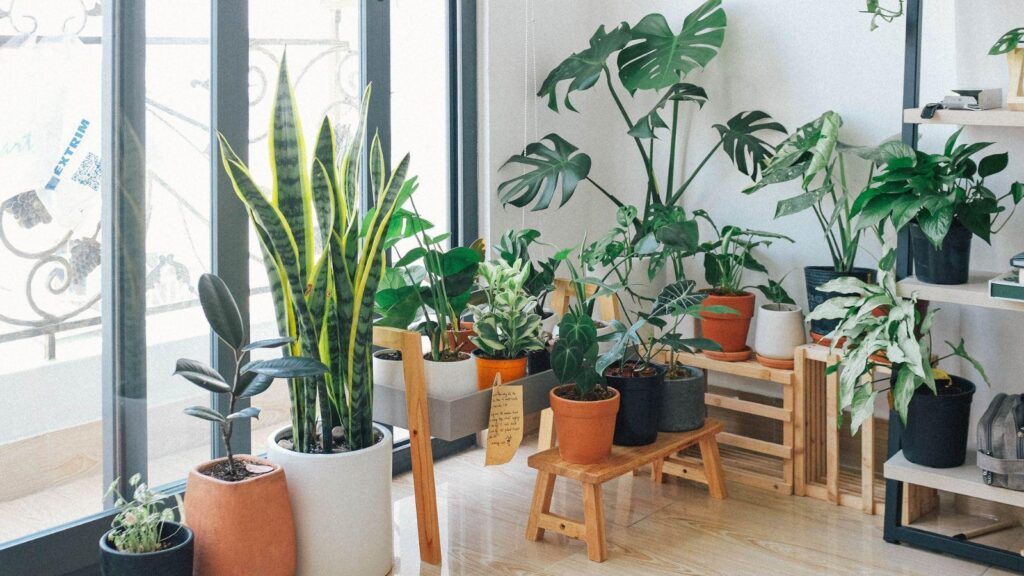
Elevate plants using vintage-inspired wood stands.
Use bold, sculptural foliage to mirror the drama of the furniture.
Match planter tones to nearby wood finishes for cohesion.
3. Industrial
Style Traits: Raw materials, exposed pipes, metal accents, concrete textures
Plant Picks:
ZZ Plant
Philodendron Brasil
Cactus varieties
Design Tips:
Use steel or cement planters to echo industrial finishes.
Add greenery to soften hard edges or monochrome color palettes.
Vertical plant walls or ceiling-suspended greenery can bring balance to cavernous loft spaces.
4. Bohemian / Eclectic
Style Traits: Maximalism, layered textiles, vibrant colors, global influences
Plant Picks:
String of Hearts
Calatheas (especially for patterned leaves)
Ponytail Palm
Design Tips:
Go big on variety—mix textures, heights, and leaf shapes.
Use colorful, patterned pots or woven baskets as plant holders.
Let plants trail off bookshelves, door frames, and ceiling hooks for a wild, collected look.
5. Minimalist / Japandi
Style Traits: Neutral palette, low clutter, focus on form and function, zen influence
Plant Picks:
Olive Tree
Alocasia Polly
Asplenium Nidus (Bird’s Nest Fern)
Design Tips:
Prioritize form over foliage—go for architectural silhouettes.
Use shallow bonsai-like trays or sculptural pots in muted tones.
Display one plant per zone—let it breathe visually.
6. Farmhouse / Cottagecore
Style Traits: Soft furnishings, vintage details, warm woods, lived-in charm
Plant Picks:
English Ivy
Lavender
Geraniums
Design Tips:
Use terracotta, vintage pitchers, or repurposed ceramics as containers.
Place plants near natural light sources like kitchen sinks or windowsills.
Integrate with floral or gingham textiles for continuity.
7. Contemporary
Style Traits: Sophisticated, neutral tones, curated accents, clean lines
Plant Picks:
Kentia Palm
ZZ Raven
Anthurium
Design Tips:
Use large, dramatic plants to anchor minimalist zones.
Keep planters sleek—brushed metals or sculptural matte finishes.
Consider symmetry—matching pairs can enhance a contemporary layout.
8. Coastal / Nautical
Style Traits: Light colors, breezy textiles, sea-inspired palettes
Plant Picks:
Areca Palm
Maidenhair Fern
Eucalyptus (in water or dried)
Design Tips:
Opt for whitewashed or rope-wrapped planters.
Mix live and dried botanicals to keep it light and low-maintenance.
Place near linen curtains or next to driftwood accents for seamless blending.
9. Art Deco / Glam
Style Traits: Bold colors, metallic accents, geometric patterns
Plant Picks:
Calathea Orbifolia
Orchid
Fan Palm
Design Tips:
Use statement pots—black, gold, or marble with metallic accents.
Choose plants with symmetrical or dramatic foliage to match the glam geometry.
Spotlight plants with accent lighting to create drama.
10. Rustic Modern
Style Traits: Organic textures, reclaimed materials, neutral but warm palette
Plant Picks:
Succulent assortments
Fern varieties
Bonsai or small trees
Design Tips:
Go for earthen pots, aged metals, or reclaimed wood containers.
Group smaller plants on shelves made of raw wood or stone.
Let greenery enhance the materiality—place next to stone walls or wooden beams.
Design Integration Tips That Work Across All Styles
Regardless of your design aesthetic, there are a few universal strategies to help plants feel intentional:
✅ Repeat a Leaf Color in Your Room’s Palette
Use the greens in your plants as a jumping-off point. Olive-toned upholstery or sage-toned walls subtly reinforce the foliage.
✅ Use Varying Heights for Depth
Layering a tall floor plant, a medium tabletop plant, and a trailing plant creates a visual arc—much like layering lighting.
✅ Create Zones with Greenery
Use plants to separate functions within open layouts—especially useful in small apartments or studio spaces.
✅ Don’t Overcrowd
More plants don’t always equal better design. Choose 1–2 strong pieces that support your style rather than filling every surface.
Conclusion: Nature Is the Ultimate Neutral
Plants aren’t tied to one trend or time period. They’re the one element that adapts, evolves, and enriches every design language—whether you’re styling a minimalist flat in Oslo or a boho loft in Barcelona.
The secret? Make greenery an extension of your design voice, not just an add-on. When chosen with care and placed with purpose, plants can do more than decorate a room—they can define it.